
Blog
Snow Blower Wheels vs. Tracks: Choosing for Your Property

Wheeled and tracked snow blowers can both clear snow effectively, but their handling characteristics are different. The right choice depends on driveway layout, slope, surface, turning space, snow conditions and how you plan to store the machine. Neither drive system is automatically best for every property.
How wheeled models behave
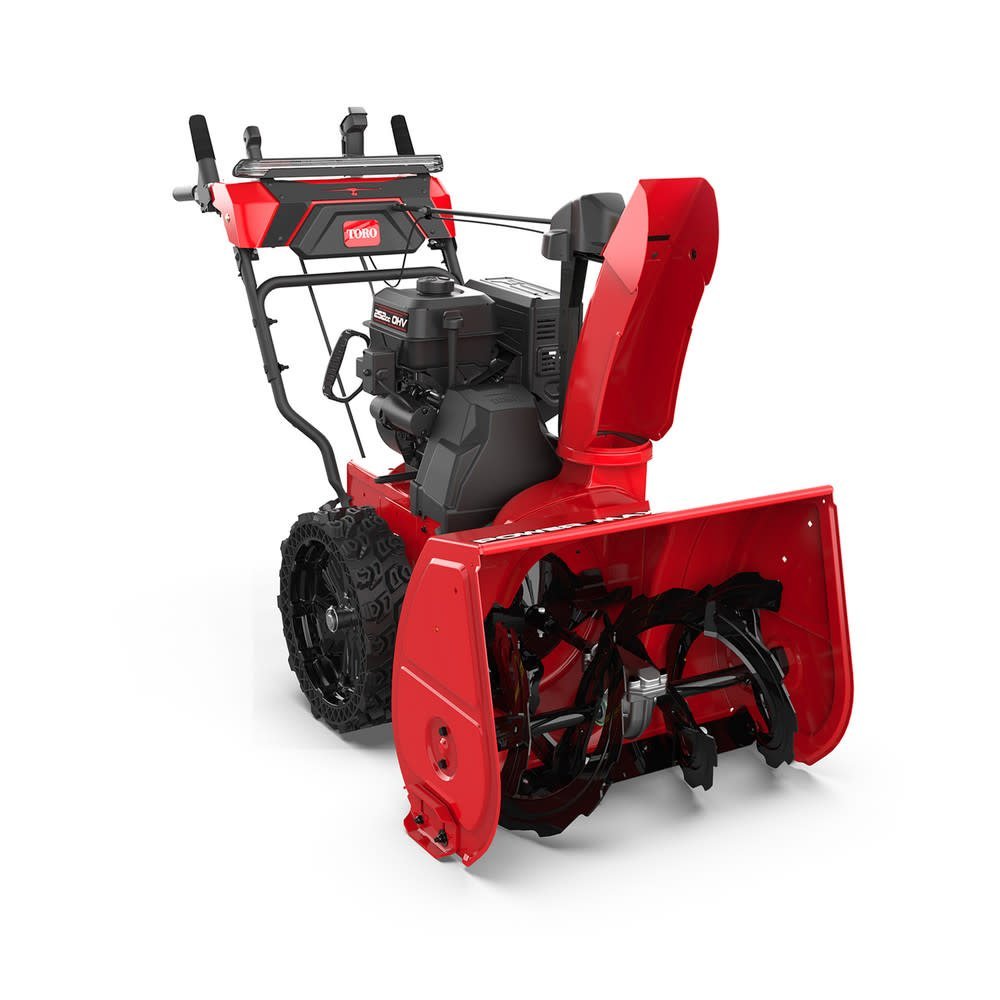
Wheeled snow blowers are common across single-stage and two-stage ranges. They can be easier to pivot and reposition on many paved driveways, depending on the model’s steering and drive system. Tire tread, wheel size, weight distribution and available traction features all affect how the machine moves. A wheel drive system may be a practical fit for a relatively level driveway with room to turn.
How tracked models behave
Tracked machines use a continuous track assembly instead of standard drive wheels. The larger contact area can help some models maintain forward traction on slopes or uneven ground. Track designs and drive controls vary, and a tracked model may feel different when turning or moving across a tight paved area. Check whether the model has a transport or freewheel mode and what the manufacturer says about operating on different surfaces.
Questions to ask about your property
- Is the driveway flat, sloped or uneven?
- Is the surface asphalt, concrete, gravel or pavers?
- How tight are the turns around vehicles, walls and landscaping?
- How far must the machine travel from storage to the clearing area?
- Will you regularly clear packed snow at the end of the driveway?
Compare the whole machine, not only the drive system
Clearing width, intake height, engine or motor, weight, control layout, chute operation, maintenance access and storage footprint matter too. A large tracked machine may be unnecessarily difficult to maneuver in a small area, while a compact wheeled model may not suit a steep or demanding property. Compare the exact specifications and operator instructions rather than assuming all machines of one type behave alike.
Try to assess handling before buying
Where possible, look at the machine in person or review a manufacturer demonstration that shows turning and control operation. Consider the user’s strength and comfort with the machine’s weight and controls. For battery models, also check the battery system and charging requirements.
Armley Bigdiscount carries a selection of outdoor power equipment and snow blowers. Compare each listing’s exact configuration and consult its manual before deciding.
Traction is only one part of the decision
Compare how the drive system behaves when the machine is turned, reversed and transported between the storage area and the driveway. Some wheeled machines have differential or trigger steering features; track systems can use different steering arrangements. These details vary widely. Look at the controls, operating weight and turning method in the owner’s manual or a manufacturer demonstration rather than assuming every wheeled or tracked model behaves alike.
Also consider seasonal storage. Tracks, tires, drive cables and friction components all require inspection according to the service schedule. A tracked model may have different cleaning and tension checks from a wheeled machine. If the property has a narrow shed entrance, steps or a steep path to the driveway, measure that route before choosing a heavier machine. The easiest model to clear with may not be the easiest model to store or move.