

Blog
RV Carport Clearance: Measure Height, Width and Turning Space

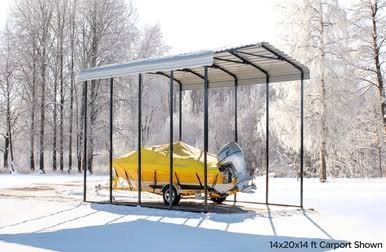
An RV carport must fit the vehicle and the route used to reach it. A structure that appears large enough on paper may be difficult to use if the approach is tight, the ground slopes or roof accessories reduce clearance.
Measure the RV in travel configuration
Record overall height with air conditioners, antennas, roof racks and other permanent accessories included. Measure mirrors and the widest point of the vehicle. Use the manufacturer’s vehicle dimensions as a starting point, then verify the actual RV.
Allow for movement and maintenance
Consider the turning path, approach angle, door swing and room to walk around the RV. Side clearance is useful for checking tires, connecting utilities and cleaning. Do not plan the opening so tightly that small steering or parking variations create contact risk.
Check the site and structure
- Measure overhead branches and utility lines along the approach
- Check ground slope and drainage
- Verify clear entry height, not just roof peak height
- Confirm anchoring and foundation requirements
- Review local wind, snow and permit rules
Armley lists an Arrow 14 ft. x 29 ft. x 14 ft. carport and a longer Arrow 14 x 47 x 14 model. Compare the exact clearances and manufacturer specifications before deciding.
Use the full dimensions
Sketch the RV and structure to scale, including the driveway and turning path. Browse the garage and carport collection and read the RV carport clearance guide.