

Blog
Trailer Tongue Weight Explained: A Safe Hitch and Loading Checklist

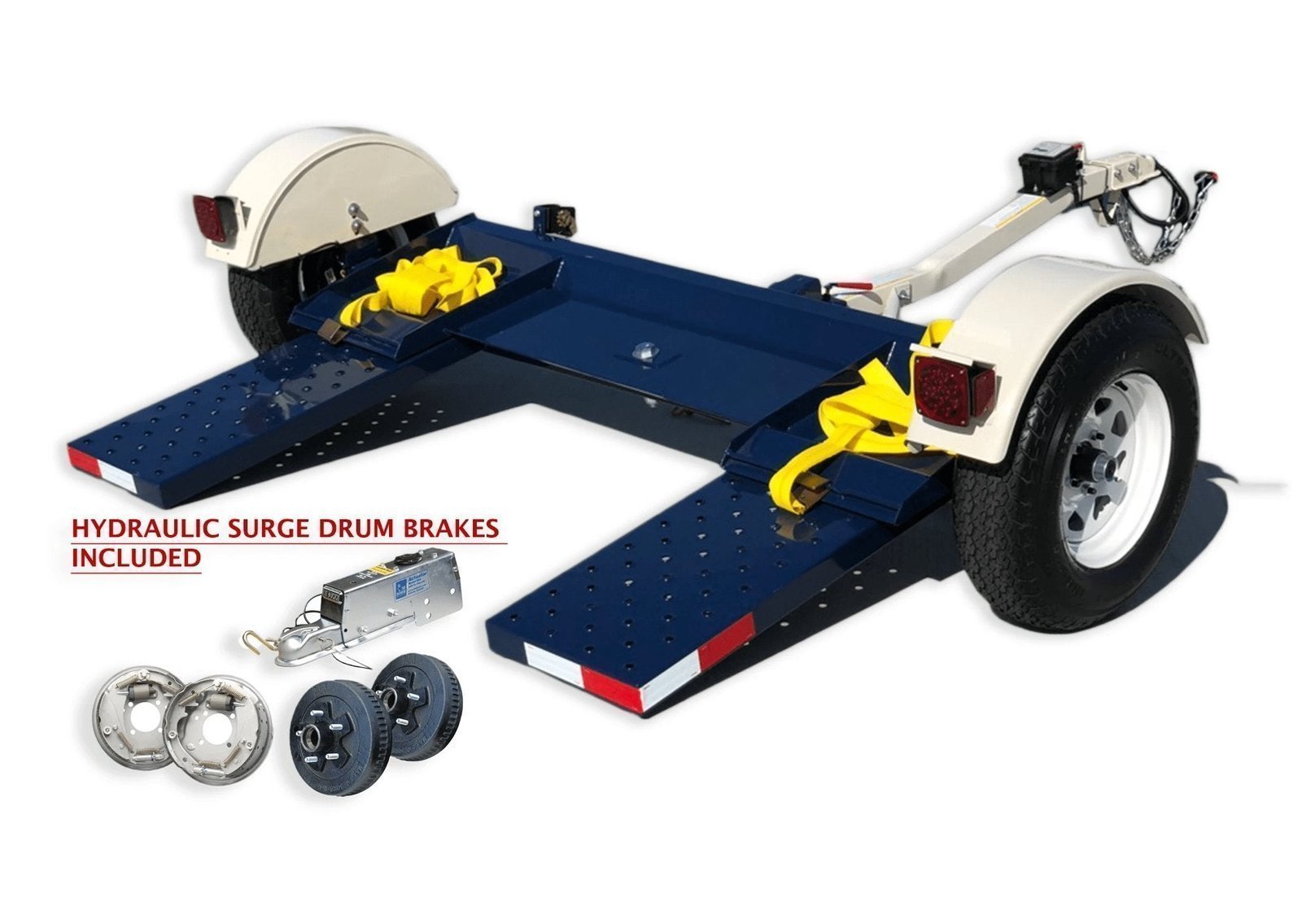
Tongue weight is the downward force a trailer applies to the hitch when coupled to a tow vehicle. It is one part of a safe towing setup. Too much or too little tongue weight can affect handling, and the acceptable range depends on the trailer and tow vehicle manufacturer’s instructions.
Why tongue weight matters
Trailer loading changes how weight is distributed between the trailer axles and the hitch. If too much cargo is placed at the rear, the trailer may become unstable. If too much is concentrated at the front, the hitch or vehicle may be overloaded. The correct balance is not a universal number for every trailer; follow the ratings and loading diagram supplied for your equipment.
Read every relevant rating
- Maximum trailer weight and gross combined weight rating for the tow vehicle.
- Maximum tongue weight for the vehicle and hitch.
- Trailer gross vehicle weight rating and payload.
- Coupler and ball rating, including the correct size.
- Axle and tire load ratings.
- Brake and breakaway system requirements for the trailer and location.
Load cargo deliberately
Place items where the trailer manufacturer specifies and secure them so they cannot shift. Do not use a rough estimate as a substitute for a proper measurement when tongue weight is near a limit. A suitable tongue-weight scale or other approved measuring method can help, provided it is used according to its instructions and the trailer is supported safely.
Check the vehicle and hitch as a system
The weakest rated component may limit the combination. A vehicle with a high trailer rating does not increase a hitch or coupler’s rating. Confirm the receiver, ball mount, ball, coupler, safety chains, wiring and brake controls are compatible and in good condition. Follow the tow vehicle’s owner’s manual and the trailer manual, including any load distribution or sway-control requirements.
Before each trip
Check that the coupler is fully seated and locked, the safety chains are connected as instructed, the breakaway system is correctly attached where fitted, the lights work and tires are properly inflated. Recheck the load after the first short distance and whenever you stop, if it is safe to do so.
Armley Bigdiscount offers a range of trailers and towing products. Compare model-specific ratings rather than relying on a generic capacity estimate.
Where to confirm the limits
Do not rely on a generic tongue-weight percentage as a substitute for ratings. NHTSA notes that vehicle towing capabilities and tongue-weight recommendations are manufacturer-specific, so confirm the limits in the tow vehicle and hitch documentation. See NHTSA guidance on vehicle towing capability and tongue weight and the manuals for your exact vehicle and trailer.
Measure tongue weight with the trailer loaded
Tongue weight changes when cargo is added, removed or repositioned. A measurement taken with an empty trailer does not describe the combination after the equipment is loaded. Use a suitable scale or manufacturer-approved method on a level surface and follow the scale’s instructions. Keep the trailer supported safely while measuring, and never get beneath a suspended or unstable trailer.
After measuring, compare the result with the lowest applicable limit among the tow vehicle, receiver, ball mount, ball and coupler. Also account for passengers and cargo inside the tow vehicle when checking its payload and gross axle ratings. If the combination is outside a rating, remove or reposition cargo only in a manner permitted by the trailer maker, then measure again. If you cannot achieve a compliant setup, use a more suitable tow vehicle or trailer.